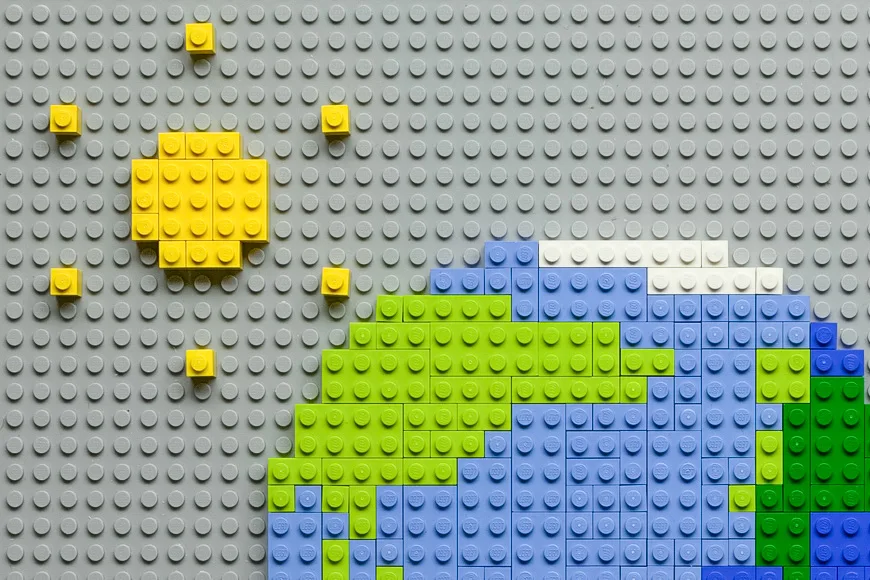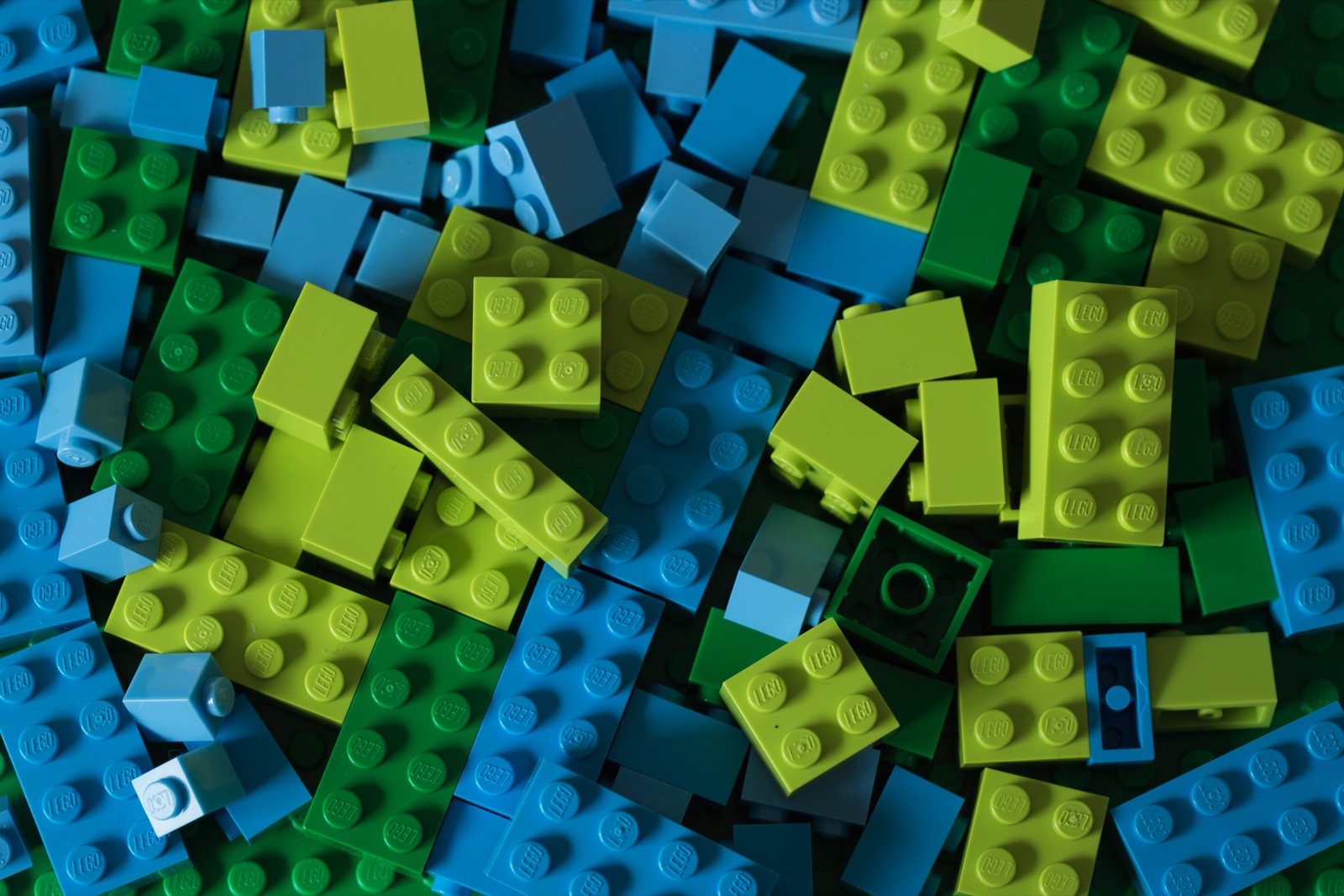
We keep a box of LEGO bricks in the studio. Over the years they’ve been built into fireworks, snowfall, a ping pong match, and half a dozen other things. For World Environment Day, we used the same bricks again — this time to make a short film about consumption and waste, on our own dime.
The United Nations theme that year was “Consume with Care.” We wanted to make something that honoured the message without being heavy-handed. The bricks felt right as a material: designed to be built, taken apart, and built again. Reuse is literally what they’re for.
Writing the script
The animation needed to land a serious environmental message while remaining watchable. We leaned into humour — enough to keep it engaging, not so much that it undercut the point. We brought in actor Jordan Long for the voiceover, which gave the script a warmth and timing that a straight narration wouldn’t have achieved.
The production
Stop motion with LEGO bricks is slower than most people expect. Each frame requires sorting bricks by colour, placing them precisely, and making micro-adjustments until the composition holds. Some frames took five minutes. Others took over an hour.
The final film runs to 444 frames. We spent roughly 50 hours animating — including one all-nighter to hit the deadline. That’s the reality of stop motion: the craft is in the patience, and the schedule rarely accounts for it.
Constraints as creative fuel
Working with a fixed set of bricks forced creative decisions that a limitless supply wouldn’t have. When you can’t order more red 2x4s, you find a different way to build the shape. When the palette is limited, the compositions become more deliberate.
It’s a principle that applies well beyond LEGO. The best creative work often comes from constraints — a tight budget, an unusual format, a material that won’t behave. The trick is to treat the limitation as a brief, not an obstacle. (We’ve written more about how budget constraints actually shape stop-motion projects and how planning multiple aspect ratios up front is one of the cheapest ways to get more from a single shoot.)
The result
The finished animation was featured on the UN Environment Programme’s video page. For a project built from a box of studio bricks and a good idea, that felt like exactly the right outcome.